Flood Insurance in Oklahoma City, OK
Water is one of the most powerful and destructive forces in nature. According to the Federal Emergency Management Agency, just one inch of floodwater can cause up to $25,000 in damage to a standard home. Yet many property owners remain unprotected, assuming their standard policies will cover the damage.
The Hidden Threat of High Water
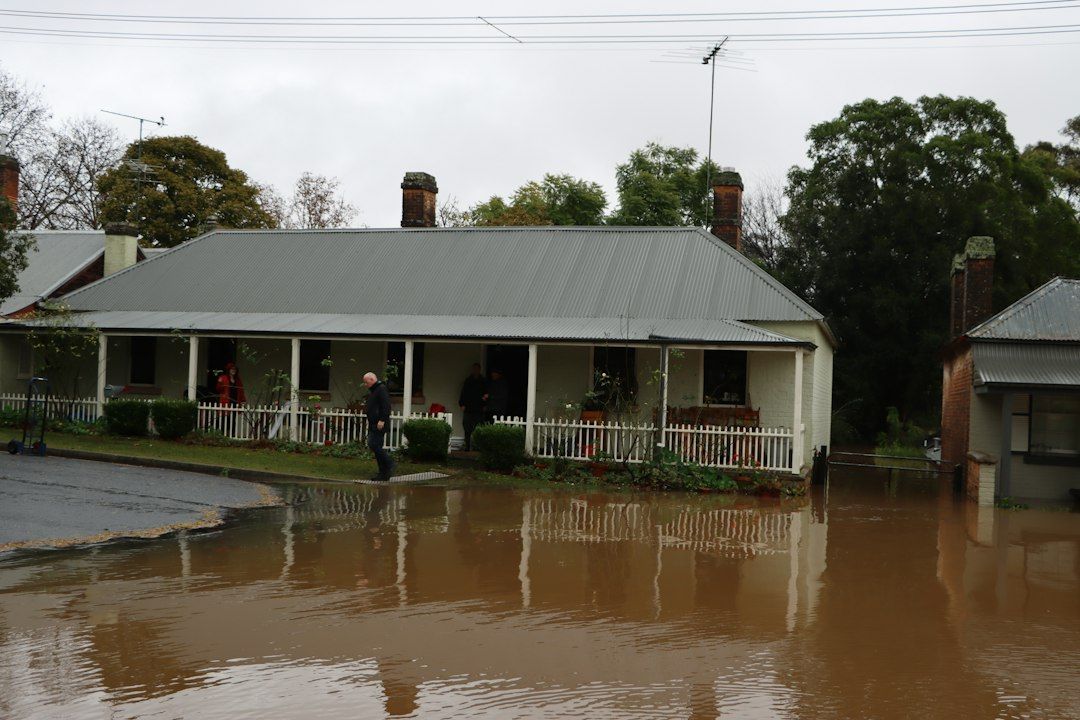
Water is one of the most powerful and destructive forces in nature. According to the Federal Emergency Management Agency, just one inch of floodwater can cause up to $25,000 in damage to a standard home [1]. Yet, despite the staggering financial risk, many property owners remain entirely unprotected against this specific peril, often believing that their standard insurance policies will cover the damage.
At Cody Anderson Agency, our highest priority is to earn your trust, loyalty, and friendship while offering excellent service. For over 30 years, we have proudly served the Oklahoma City area, providing comprehensive insurance solutions tailored to our community. Led by agency owner and U.S. Air Force veteran Cody Anderson, we are deeply committed to supporting our neighbors, including farmers, ranchers, blue-collar business owners, active-duty service members, and veterans. We believe in being with you when it counts.
When considering flood insurance in Oklahoma City, navigating the complex rules, policy options, and risk assessments can feel overwhelming. This guide is designed to clarify the realities of local flood risks, explain the differences between federal and private coverage options, and provide actionable advice for homeowners, renters, and property investors looking to secure their financial future.
The Reality of Flooding in Central Oklahoma
Oklahoma weather is famous for its rapid, dramatic shifts. We can experience prolonged dry spells followed by sudden, torrential downpours that overwhelm the local infrastructure. Many residents assume they do not need to worry about water damage unless they live adjacent to the North Canadian River, Lightning Creek, or within a federally designated high-risk flood zone. However, the reality of urban flooding tells a very different story.
Urban Sprawl and Flash Flooding
As Oklahoma City and its surrounding suburbs continue to grow, the increase in paved surfaces, concrete, and densely packed neighborhoods has changed how water travels. When heavy rain falls on surfaces that cannot absorb it, the runoff has to go somewhere. This leads to localized flash flooding, street inundation, and water backing up into residential areas that are miles away from the nearest river.
The spring of 2025 served as a stark reminder of this vulnerability. In April of that year, Oklahoma City recorded a staggering 12.55 inches of rainfall, breaking historical records and causing widespread flash flooding that swept away vehicles and damaged countless properties [2]. Severe storm systems, such as the powerful derecho that swept across the state in June 2026 [3], further demonstrate that destructive weather is not confined to a single season or location.
Understanding Flood Zones
FEMA maps out flood risks using the Flood Insurance Rate Map system. Areas designated as Zone A or Zone AE are considered Special Flood Hazard Areas. If you carry a mortgage from a federally backed or regulated lender and live in one of these high-risk zones, you are legally required to purchase a flood policy.
However, living outside a high-risk zone does not mean you are immune to the threat. Historically, roughly one in four flood insurance claims comes from moderate to low-risk areas, often designated as Zone X. Because the clay-heavy soils of central Oklahoma are notoriously slow to absorb heavy rainfall, pooling water can easily breach doorways and ground-level windows in almost any neighborhood.
The Homeowners Insurance Gap
One of the most dangerous misconceptions in the insurance industry is the belief that standard property coverage protects against floods. It does not. A typical home insurance policy covers water damage only if it originates inside the home from a sudden, accidental event, such as a burst pipe or a failing water heater.
If water touches the ground before entering your home, whether from a cresting creek, a saturated yard, or an overwhelmed city storm drain, it is classified as a flood. Without a separate, standalone flood policy, you will be entirely responsible for the costs of repairing your foundation, replacing your drywall, and purchasing new belongings.
Coverage Tailored to Your Needs
Water damage impacts different residents in different ways. The type of policy you need depends entirely on whether you own the building, rent the space, or lease the property out to others.
For Homeowners
A standard residential flood policy typically offers two distinct types of coverage. You can purchase them together or separately, though we strongly advise securing both.
Building Property Coverage protects the physical structure of your home and its foundational elements. This includes the electrical and plumbing systems, central air conditioners, furnaces, water heaters, built-in appliances, and permanently installed carpeting or cabinetry. If a severe spring storm pushes a foot of water into your living room, this coverage pays to tear out the ruined materials, dry the structure, and rebuild the damaged areas.
Personal Property Coverage protects the items inside your home. This includes your furniture, electronics, clothing, curtains, and freestanding appliances like your washer and dryer. It is important to note that flood policies generally value personal property at actual cash value, which factors in depreciation, rather than replacement cost.
For Renters
Many tenants operate under the false assumption that their landlord will replace their belongings if the apartment or rented house floods. In reality, a landlord's policy covers only the physical building. If river floodwaters ruin your custom sofa, your electronics, and your wardrobe, you are financially responsible for replacing them.
Securing a flood policy specifically designed for your personal belongings is a highly affordable way to protect your assets. We frequently help tenants secure comprehensive renters insurance in Oklahoma City, OK, and we always discuss adding a standalone flood policy to ensure there are no catastrophic gaps in protection.
For Landlords and Property Investors
Real estate investors and landlords face unique challenges. When a rental property floods, you are not only dealing with the physical destruction of your asset but also the potential loss of rental income while the property is uninhabitable.
Securing the right commercial insurance in Oklahoma City, OK is critical for protecting your bottom line. Landlords must carry building property coverage to repair the structure. Additionally, while federal flood policies do not typically cover lost rental income, certain private market policies might offer endorsements to help offset the revenue you lose while the building undergoes remediation and repair.
Protecting Your Vehicles
It is easy to focus entirely on homes and buildings, but flooded streets are a major hazard for vehicles in Oklahoma. If your truck is caught in a flash flood or your car is parked in a driveway that goes underwater, a property flood policy will not cover the damage.
Instead, vehicular water damage falls under the comprehensive tier of your auto policy. As an independent insurance agency in Oklahoma City, OK, we regularly review policies to ensure our clients have the appropriate comprehensive auto insurance in Oklahoma City, OK to repair or replace their vehicles if they are submerged in rising waters.
Comparing Your Coverage Options
When you decide to protect your property from rising waters, you generally have two avenues to explore. You can purchase a policy through the federal government, or you can explore the growing private insurance market. We have access to both and can help you navigate the nuances of each.
The National Flood Insurance Program
The National Flood Insurance Program, managed by FEMA, is the most common source of flood coverage in the United States. Almost anyone living in a participating community can purchase a policy, regardless of their home's flood history or geographic risk zone.
The program uses a pricing methodology known as Risk Rating 2.0. Rather than basing premiums solely on static flood zones, this modern system calculates costs based on individual property variables. These variables include the distance to a water source, the type of water body nearby, the elevation of the home, the frequency of heavy rainfall, and the cost to rebuild the structure.
While the federal program is reliable and widely available, it does have strict limitations. For residential properties, coverage is capped at $250,000 for the building and $100,000 for personal property. For commercial properties, the limits are capped at $500,000 for the building and $500,000 for contents. Furthermore, the federal program generally does not cover temporary living expenses if you have to move into a hotel while your home is being repaired.
Another critical factor is the waiting period. Federal policies mandate a strict 30-day waiting period from the time of purchase before the coverage takes effect. You cannot wait until the local news forecasts a week of torrential rain to buy a policy. The only common exception to this rule is if you are purchasing the policy in connection with closing on a new mortgage.
The Private Flood Insurance Market
In recent years, the private market has expanded significantly, offering competitive alternatives to the federal program. Private carriers use their own advanced algorithms and risk models to price policies, which means that in some areas, private coverage can actually be more affordable than the federal equivalent.
Private policies often solve the limitations of the federal program. They can offer building coverage limits that well exceed $250,000, making them essential for high-value homes and complex agricultural or commercial properties. Many private policies also offer "loss of use" coverage, which pays for your temporary housing and living expenses if you are displaced. Finally, private policies often have much shorter waiting periods, sometimes taking effect in just 10 to 14 days.
The primary drawback of the private market is that carriers have the right to deny coverage. If your home has a history of severe, repeated flooding, a private carrier might decline your application, leaving the federal program as your only option. We specialize in comparing both markets to find the most robust and cost-effective solution for your specific property.
Proactive Steps to Minimize Water Damage
Insurance provides the financial safety net needed to recover from a disaster, but the best scenario is avoiding severe damage altogether. Property owners in central Oklahoma can take several proactive steps to minimize their risk and make the claims process much smoother.
Evaluate your property's grading and landscaping. The ground around your foundation should slope away from the home, encouraging rainwater to flow toward the street or municipal drainage systems. If you notice water pooling against your exterior walls after a moderate rain, it is time to consult a landscaping professional to correct the drainage.
Maintain your gutters and downspouts diligently. Gutters clogged with leaves and debris will quickly overflow during heavy spring storms, dumping sheets of water directly onto your foundation. Ensure your downspouts extend several feet away from the base of your home.
If your home features a basement or a low-lying crawlspace, consider installing a high-quality sump pump with a battery backup. Severe storms frequently knock out the power grid, rendering a standard electric sump pump useless exactly when you need it most.
Finally, maintain a detailed home inventory. Walk through your property with a smartphone camera, opening closets and drawers, and recording the condition of your home and your belongings. Store this video securely in the cloud. If you ever need to file a claim, having indisputable visual proof of the items you owned and their condition will dramatically speed up the payout process and ensure you receive the funds you deserve.
Conclusion
Water is uncompromising, and the damage it leaves behind can be financially devastating. As urban areas expand and weather patterns remain unpredictable, the threat of localized flooding in Oklahoma City is a reality every resident must respect. Whether you are safeguarding a sprawling rural ranch, a suburban family home, or a downtown rental property, understanding your risk and securing the right protection is a fundamental part of responsible ownership.
At Cody Anderson Agency, we know that insurance is about more than just paperwork and premiums. It is about providing peace of mind and being a steadfast partner during life's most challenging moments. We are proud of our deep roots in the community and our unwavering commitment to educating and protecting our clients.
Cody Anderson Agency
When you are ready for coverage that fits your life, business, or property, contact Cody Anderson Agency for a personalized insurance review today. Whether you are a homeowner, rancher, business owner, active-duty service member, or veteran, we are here with dependable guidance and protection when it counts.
Do not wait for the storm clouds to gather before you secure your financial future. We will take the time to understand your unique needs, compare the best federal and private policy options, and build a safety net you can rely on. Visit us online to request a personalized quote and ensure you have the comprehensive protection you deserve.
By Cody Anderson & Team · Published 7/21/2026