
Oklahoma Landlord Insurance: What Changes When You Rent Out a House
Renting out a home in Oklahoma? Learn how landlord coverage handles the building, storms, liability, lost rent, vacant periods, and rural outbuildings.
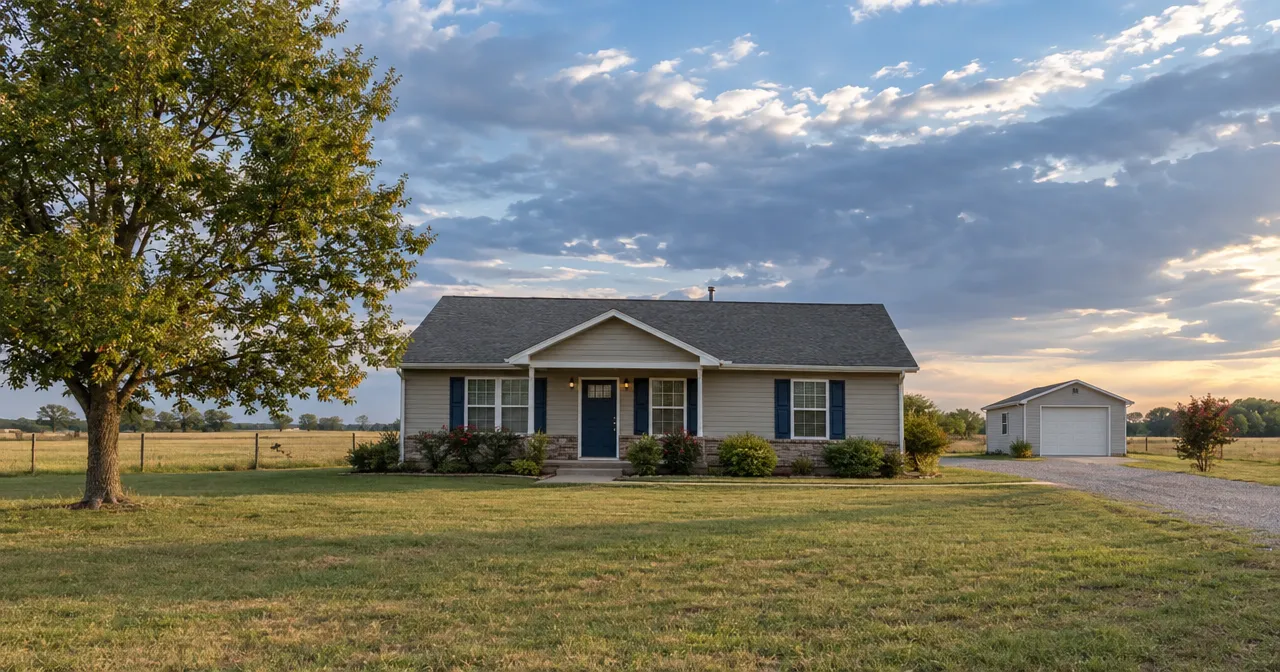
A house can change jobs without changing addresses. Maybe you bought a new place near Harrah and kept the old one as a rental. Maybe a military move takes your family away from the Oklahoma City area for a few years. Or perhaps you inherited a small house in a rural community and plan to lease it rather than sell it.
Once someone else lives there, the insurance questions change. Your old homeowners policy was written around the way you used the property; the new arrangement involves a tenant, rent payments, and possibly an empty house between leases. Landlord insurance is not simply homeowners insurance with a different name. The exact coverage depends on the issued policy and the property you describe to the insurer.
The practical goal is to know what you would pay yourself after a fire, storm, injury claim, or long repair. Here is a way to review a rental house without losing track of the details that matter in Oklahoma.
Tell the insurer how the house is actually used
Before signing a lease, tell your agent whether the property will be a long-term rental, a short-term stay, partly owner-occupied, or temporarily vacant. Explain whether it is a single-family house, duplex, condo, manufactured home, or home on acreage. Those details can affect the type of policy available and what it covers. A policy for your primary residence should not be assumed to protect a house you now rent to someone else.
Ask for the effective date of any replacement coverage so the change in use does not create an avoidable gap. If you still have a mortgage, check what insurance the lender requires, but remember that meeting a lender's requirement is not the same as making the repair and liability limits fit your situation. If you have more than one rental, review each address separately.
A vacant house is another distinct use. A home waiting for its first tenant, sitting empty during a renovation, or vacant after a tenant leaves may need different terms. Farmers' overview of vacant-home coverage notes that vacancy can pose special insurance problems and describes options that may be available. Do not assume a certain number of vacant days is automatically allowed on your policy; ask how your contract defines vacancy or unoccupancy, what happens to theft or vandalism coverage, and when to report a change.
If you occasionally host paying guests instead of using an ordinary lease, say so explicitly. The National Association of Insurance Commissioners' home-sharing guidance explains that typical homeowner or dwelling forms may not be designed for short-term rentals. A platform's host protection should not be treated as a substitute for checking your own property and liability policy.
Separate the building, your belongings, liability, and rent
A useful landlord-policy review has four columns. Do not let a single line reading “dwelling coverage” stand in for all four.
1. The rental house and attached features. Ask what it would cost to rebuild with comparable materials today, not what you paid for the property or what its land and house might sell for. Check the coverage limit, whether damage is settled at replacement cost or actual cash value, any roof-specific rules, and whether ordinances or code-upgrade costs have a separate limit. For an older house, a current rebuild estimate is particularly useful.
2. Detached buildings and landlord-owned property. A detached garage, shed, workshop, fence, or small barn may have its own limit or require additional coverage. Make a list of what each structure is used for. Inside the house, distinguish items you own—such as an appliance or furnished rental's furniture—from the tenant's clothes, electronics, and other possessions. Farmers' landlord insurance overview lists other structures, landlord personal property, liability, and loss of rents as coverage options; it does not mean all are automatically included in every policy.
3. Premises liability. If someone is hurt and alleges a condition of the property caused the injury, ask what landlord liability protection and defense costs your policy provides, subject to its terms. Consider the real exposures: a loose step, poor lighting, an icy walkway, or a tenant's use of a detached shop. Discuss limits, exclusions, and whether an umbrella policy can cover the rental exposure. An umbrella is not automatic: ask whether the rental policy qualifies as underlying coverage and what minimum liability limits it requires. Routine upkeep and prompt repairs still matter; liability insurance does not replace them.
4. Loss of rental income. A covered fire or storm may make the property uninhabitable while repairs are made. Optional loss-of-rents coverage can help replace qualifying rent during a covered interruption, subject to limits and the policy's conditions. Ask how the insurer calculates the amount and period: Is it the rent stated in the lease, the actual rent collected, or another measure? Does the coverage end when repairs reasonably could be finished? Do not confuse this with protection against a tenant simply missing payments, a slow leasing market, or a vacancy between tenants.
For example, a landlord collecting $1,250 a month could miss two months of payments while a covered roof and interior loss is repaired—$2,500 of expected rent, before other expenses. That arithmetic illustrates the exposure, not a promise that a policy would pay it. A separate storm deductible, claim conditions, and any loss-of-rents limit still matter.
Keep the tenant's policy in its own lane
A tenant's renters insurance generally helps protect the tenant's belongings and may include personal liability and additional living expenses for qualifying losses. It is not the landlord's insurance for rebuilding the house. Likewise, the landlord's policy should not be assumed to replace the tenant's furniture or cover the tenant's living costs after a storm. Encourage tenants to review their own renters coverage, but check your policy even if the lease requires them to carry it.
A furnished rental needs a more precise inventory: document your appliances, furniture, tools, and other items left on the premises, then check which ones count as building fixtures and which need landlord-owned contents coverage. If the tenant uses your shed to store an ATV or has a dog, tell your agent; details like animals, trampolines, pools, or use of outbuildings may affect underwriting or liability terms. Do not assume pet insurance for an animal addresses injury or property-liability questions; those are different coverages.
Model an Oklahoma storm before it happens
In Oklahoma City, Harrah, Tulsa, and smaller communities, wind and hail can damage a rental roof, siding, and a detached garage in the same event. Start with the actual rental-property declarations page: Is wind or hail covered? Is there a separate storm deductible? Is the roof settled at replacement cost, actual cash value, or under an age-based schedule? Are cosmetic hail damage and metal-roof damage treated differently? The Oklahoma Insurance Department's wind-and-hail guidance advises checking for higher hail deductibles, restrictions, and exclusions. Do not assume the rental has the same terms as your primary home.
Here is a simple cash-planning example, not a claim estimate. If the insured amount used to calculate a rental house's wind-and-hail deductible is $280,000, a 2% deductible is $5,600. Suppose covered damage is estimated at $18,000. The deductible alone can leave the owner responsible for $5,600; depreciation, limits, or excluded work could increase the amount needed to complete repairs. A separate lost-rent benefit, if purchased, would be evaluated under its own terms. The percentage is typically applied to an insured amount defined by the policy—not simply to the roofer's $18,000 estimate. Confirm the calculation base and whether the garage shares a limit or deductible.
Cody Anderson Agency also offers wind-and-hail deductible policies. If you are considering one alongside rental coverage, ask whether the particular property is eligible, what event triggers payment, its maximum benefit, and how it coordinates with the underlying claim. Do not assume a supplemental policy removes every out-of-pocket cost or makes an excluded roof loss payable.
Flood and earthquake are separate questions. Rising water entering a rental is not the same as wind-driven rain through a storm-damaged roof. The Oklahoma Insurance Department's flood FAQs explain that standard property insurance does not cover flood losses and that flood coverage is separate. Ask what building and contents coverage is available for the rental, and whether any rental-income loss would be insured; do not infer it from a flood policy's building limit. Review flood exposure even if the house is outside a mapped high-risk area. The department also explains that earthquake protection is generally separate. Ask which buildings it would cover and what percentage deductible would apply. Availability and exact terms depend on the policy.
Rural rentals need an outbuilding and use-of-property check
A leased house outside Harrah might come with a workshop, equipment shed, fencing, and land that looks like a small homestead. On the application, “detached garage” does not necessarily describe a building where a tenant welds commercially, stores customer equipment, or keeps livestock. Tell the insurer what structures exist and who uses them. Ask for the insured limit and settlement method for each building rather than assuming the home's limit reaches them all.
If the land is worked or rented separately, discuss farm, ranch, or commercial coverage as appropriate. A homeowner- or landlord-style policy should not be presumed to insure tractors, hay, tools used in a trade, livestock, or business income. A mechanic running a small operation from the property might need distinct business equipment and liability protection; a business-owned pickup may raise a commercial-auto question. If you store your own boat, RV, travel trailer, or ATV there, check those vehicles' individual policies rather than treating them as household contents inside the shed.
The same careful inventory helps in a city rental: a converted garage in Oklahoma City used as a tenant's shop or a small contractor's storage space changes the exposure. Describe actual use, not just the building's footprint.
For service members, plan for the move and the handoff
An active-duty assignment may turn a familiar family home into a rental while the owner lives in another state. Veterans may also keep a former home as a rental when settling near family or changing jobs. Neither military service nor distance automatically tells you what a policy covers. The important facts are when you stop living there, when the tenant moves in, whether the house sits empty, and who will respond locally after a loss.
Before a move, give your agent the new occupancy date, current contact information, and details of any property manager. Make sure the person handling the house knows how to report storm damage and can send photos and receipts. Review your family auto coverage if vehicles change garaging location or use; review personal liability and life insurance separately if rental income becomes part of the family's financial plan. Those policies solve different problems from a damaged rental dwelling.
A short review before signing or renewing a lease
Bring the declarations page, any endorsements, the lease or proposed use, and a simple property list. Then ask:
- Is this policy written for the actual rental use and any period of vacancy or short-term hosting?
- What rebuild amount and roof settlement method apply to the house? Are code-upgrade costs addressed?
- Which detached buildings, fences, and landlord-owned contents are covered, and at what limits?
- What liability limits and exclusions apply? Would an umbrella include this rental?
- Is loss of rents included, optional, or excluded? What has to happen before it pays?
- What are the regular and wind-and-hail deductibles in dollars at today's insured amount?
- Are flood and earthquake policies or endorsements needed for the property?
- Have you disclosed pets, recreational vehicles, farm use, a home business, a workshop, and any owner-stored equipment?
After damage, make sure people are safe, photograph the property when it is safe to do so, prevent additional damage where practical, and save receipts for temporary work. Contact the insurer promptly and ask what records it needs for both repairs and any claimed rent loss. Keep the lease, payment history, contractor estimates, and correspondence together. Do not assume that a claim on your own home policy covers the rental, or that the tenant's renters policy pays for the building.
Cody Anderson Agency helps Oklahoma households and property owners review coverage as their circumstances change. If you're renting out a house in Harrah, Oklahoma City, or elsewhere in the state, ask for a personalized insurance review or quote. We can help you sort through the property, liability, and storm questions so the coverage fits the way you actually use the place—with you when it counts.