
Wind and Hail Deductibles in Oklahoma: What You Could Pay After a Storm
A practical guide to calculating Oklahoma wind and hail deductibles, reading roof coverage, and preparing for storm repair costs at home or work.
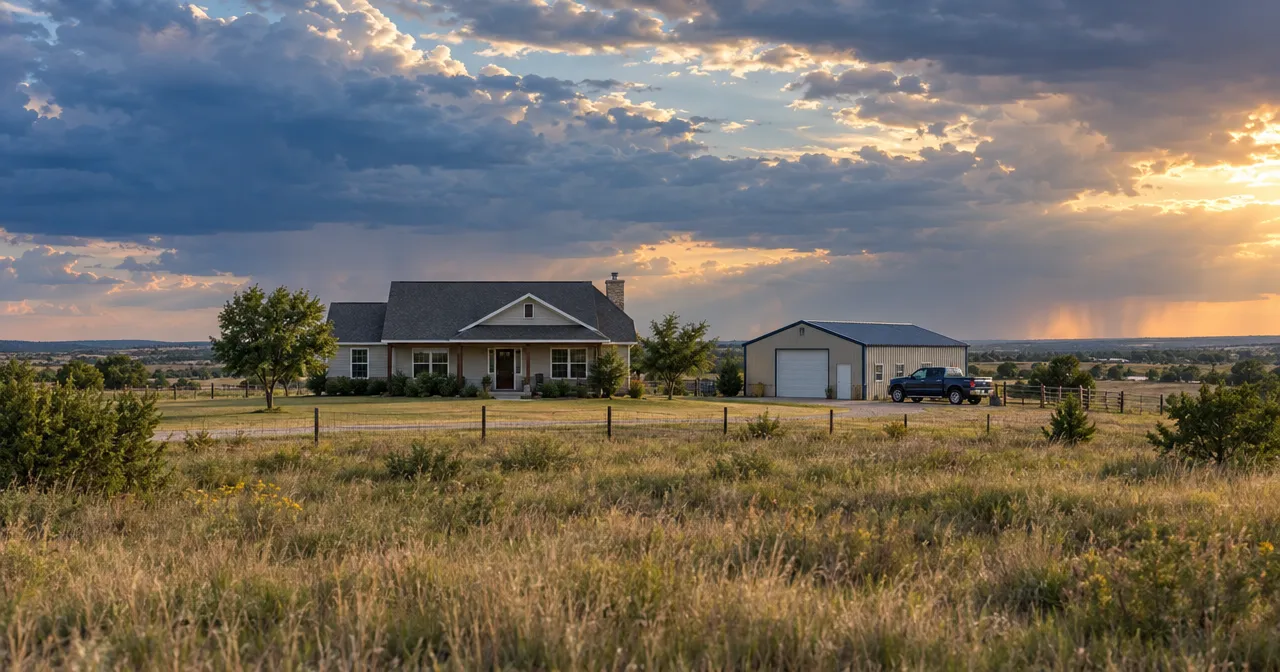
For a family in Harrah, a hailstorm can leave the roof damaged and the truck dented on the same afternoon. A contractor's estimate may be the first number you hear, but it is not the number that tells you what insurance will pay. Your wind and hail deductible, roof settlement terms, and the kind of property damaged all affect the bill you may have to cover yourself.
That matters in Oklahoma City and Tulsa neighborhoods as much as it does on an acreage outside town. A household might have a detached shop and a travel trailer; a tradesperson might keep tools in that shop and a work truck in the driveway. Those items do not necessarily share one policy or one deductible. Here is a way to read the paperwork and estimate your exposure before the next storm.
Start with the deductible on your declarations page
A deductible is the portion of a covered loss you bear before the insurer pays. Some homeowners policies have one deductible for most covered losses and a different, larger deductible for wind or hail. The Oklahoma Insurance Department's guidance on lowering home insurance costs says separate wind and hail deductibles are common and are typically expressed as 1% or 2% of the insured value of the property. Your own declarations page and policy control; do not assume your deductible matches anyone else's.
A percentage deductible is usually not a percentage of the repair estimate. If a home has a $360,000 insured dwelling amount and its wind and hail deductible is 2% of that amount, the example deductible is $7,200 ($360,000 × 0.02). At 1%, it would be $3,600. The difference is $3,600 every time that deductible applies to a covered loss under the terms of the policy.
Suppose a covered storm causes $24,000 in eligible damage, with no other limits or adjustments in this simplified example. With a $7,200 deductible, the insurer's share would be $16,800; the owner would supply the $7,200. If the covered damage totals only $5,000, the same deductible could leave no payment on that claim. A deductible is generally subtracted from the claim settlement, not a fee you send the insurer before the claim can be considered.
Check the exact calculation base. It might be the dwelling coverage amount or another insured value defined in the contract. Ask whether a separate windstorm, named-storm, or hail provision applies; how one occurrence is defined; and how deductibles work if a storm damages both the house and another insured building. Never multiply a percentage by the roof quote alone unless the policy specifically says to.
The roof check is separate from the deductible check
Two homes with the same deductible can receive very different claim payments. Ask whether the roof is insured on a replacement cost basis or an actual cash value (ACV) basis. Replacement cost generally looks to the cost of repairing or replacing covered damage with comparable materials, subject to policy conditions and limits. ACV reflects depreciation. Some policies also restrict cosmetic hail damage or use roof-specific schedules. The Oklahoma Insurance Department's wind and hail guide specifically tells homeowners to look for higher hail deductibles, cosmetic-damage restrictions, and possible wind or hail exclusions.
Here is an illustration, not a promise about a particular claim. Assume an eligible $24,000 roof replacement cost and a $7,200 wind and hail deductible:
- Replacement-cost settlement: If the full $24,000 is eligible, the eventual insurance share could be $16,800 and the owner share $7,200. An insurer may initially hold back recoverable depreciation until required repairs are documented.
- ACV settlement: If the policy values that roof at $16,000 after $8,000 of depreciation, the illustrated payment after the $7,200 deductible is $8,800. Against a $24,000 replacement, the owner may need $15,200, subject to the actual claim and policy terms.
That is why the phrase “roof covered” is not enough. Ask for the roof settlement method, any age-based schedule, cosmetic-damage language, applicable limits, and whether materials matching is addressed. Do the same for metal roofs on shops or barns; a policy may treat them differently from the house. The Oklahoma Insurance Department's collection of homeowners policy forms is a useful reminder that endorsements can change coverage and that the issued contract—not a generic description—decides what is covered.
What does wind-and-hail deductible insurance do?
Cody Anderson Agency lists wind-and-hail deductible policies among its offerings. The point of asking about one is straightforward: if you choose a large storm deductible on your main property policy, could a separate policy help with some of the eligible out-of-pocket amount after a qualifying loss? Do not assume it automatically erases the deductible or changes your main policy. The benefit, insured property, qualifying event, limit, exclusions, documentation requirements, and coordination with the underlying claim depend on the actual policy offered.
Before buying, request a side-by-side illustration showing your main policy's deductible, the supplemental policy's maximum payment, both premiums, and what you would still owe in at least two scenarios: a moderate roof claim and a major storm loss. Ask these questions in writing:
- Must the main insurer first accept and pay a covered wind or hail claim? What proof of loss is required?
- Is the benefit tied to your actual deductible, a fixed limit, a weather trigger, or some other measure? Does it apply to each event, each policy year, or both?
- Are the home, detached shop, rental house, and commercial buildings all eligible—or only a specifically listed residence?
- Are there waiting periods, roof-age or condition restrictions, exclusions for cosmetic damage, and separate limits for hail versus wind?
- If the main policy pays little or nothing because of an ACV roof schedule, coverage limit, or exclusion, does the additional policy respond at all?
Compare that arrangement with keeping a smaller deductible and a dedicated cash reserve. A separate policy is not a substitute for adequate dwelling limits, roof coverage, or emergency savings. If the language is unclear, ask an agent to walk through a sample settlement using your actual declarations pages.
Rural homes: the shop, fence, and equipment deserve their own inventory
A rural property near Harrah might include the house, detached workshop, storage building, livestock shelter, fencing, and a trailer. Write down each structure's dimensions, use, estimated rebuild cost, and whether it is attached to the home. Then ask which structures appear under homeowners “other structures” coverage, which need separate scheduling or a farm/ranch policy, and what deductible applies to each. A detached workshop full of business tools should not be treated as if it were only a backyard shed.
The building and what is inside it are different coverage questions. A homeowner's policy may have limitations for property used in a trade or business. A contractor storing saws and compressors in the shop should ask about business equipment coverage and whether those tools are protected at the premises, on a jobsite, and in transit. A small business owner should ask how commercial property, a business owners policy, or contractor coverage handles wind and hail, and whether an equipment or business-income loss has its own waiting period or deductible. Farmers and ranchers should list machinery, feed, fencing, and livestock-related property rather than assuming every item is covered under a standard home form.
For a rental house, check the landlord or rental-property policy, not the policy on your primary residence. Ask whether the rental dwelling and any detached garage have their own wind and hail deductibles, roof provisions, and loss-of-rents conditions. The tenant's renters policy generally addresses the tenant's belongings and liability, not rebuilding your rental roof. Property coverage also does not replace a review of your liability limits; an umbrella policy is a separate discussion from storm repair costs.
An Oklahoma City-area tradesperson whose garage roof, work van, and customer materials are all damaged by one storm might face several distinct claims, limits, and deductibles. Make an item-by-item list before assuming the total can be handled as one homeowners claim.
Keep vehicles and other weather hazards in separate columns
Hail dents on a family car, work pickup, motorcycle, RV, or travel trailer do not usually fall under the home's wind and hail deductible. Vehicle damage is generally a question for the applicable comprehensive coverage and its own deductible, if that vehicle has it. The Oklahoma Insurance Department notes that liability-only auto coverage does not pay for your own hail-damaged car. Review each vehicle, including an ATV or boat stored outdoors, under the policy actually covering it. A work-use truck may need commercial auto rather than a personal policy.
For active-duty service members and veterans, a deployment or move can change where a vehicle is kept and whether a house is occupied, rented out, or left vacant for a stretch. Tell your agent about those changes before assuming the existing home and auto terms still fit. A spouse managing repairs while someone is away should know where to find declarations pages, claim contacts, and the available deductible reserve. This is a practical coverage review, not a claim that military status changes how all insurers settle storm losses.
A storm can bring several causes of damage. Wind tearing off shingles is different from rising water entering the home. Flooding is generally excluded from a standard homeowners policy and calls for separate flood insurance; the Oklahoma Insurance Department's flood insurance overview explains the distinction. Earthquake damage is another separate coverage question. A wind-and-hail deductible policy does not, by its name alone, add flood or earthquake protection. Ask how a claim involving wind-driven rain, surface water, or earth movement would be evaluated under your particular contracts.
Compare the whole storm budget, not just the premium
A lower annual premium can be appealing, but compare it against the cash you would need after a loss. Build a simple household or business storm worksheet:
- Policy limits: dwelling or building replacement estimate, other-structures limits, business equipment limits, and any special roof cap.
- Deductibles: dollar or percentage amount for wind/hail, the calculation base, and separate deductibles on rental, commercial, auto, and recreational-vehicle policies.
- Settlement: replacement cost versus ACV, depreciation holdback, cosmetic restrictions, and exclusions.
- Cash on hand: funds you could actually use for a deductible, temporary repairs, and costs insurance does not cover.
- Changes since last review: new shop, roof, tools, trailer, tenant, business use, or a deployment-related change in occupancy.
For example, if a 2% storm deductible saves a household $600 a year compared with a 1% option but raises its potential deductible on a $360,000 home by $3,600, the premium difference alone does not settle the choice. That $600 is an invented comparison for illustration; request real quotes and compare the full terms. Would the family be comfortable supplying the extra $3,600 shortly after a storm? If not, a smaller deductible or another appropriate funding arrangement may deserve attention.
Loss prevention belongs on the same worksheet. The Strengthen Oklahoma Homes program describes grants for eligible owner-occupied single-family homes to upgrade roofs to FORTIFIED standards and says qualifying mitigation may affect wind premium or deductible discounts, depending on the insurer. Eligibility, funding, and insurer terms can change; check the program and ask your insurer before starting work. Importantly, the program states that its grant does not pay your insurance claim deductible.
After a storm, document first and review the estimate
Put safety ahead of inspection. Once it is safe, photograph visible damage from the ground, protect openings from further damage if you can do so safely, and keep receipts for temporary measures. Do not climb a damaged roof. Notify the relevant insurer promptly and ask how it wants the damage documented. For a business, also record which equipment is unusable and when work stopped. The Oklahoma Insurance Department's storm-preparation checklist recommends a home inventory and knowing whether property is insured at replacement cost or ACV before a loss.
Compare the adjuster's estimate with the contractor's written scope line by line. Ask about omitted structures, roof material, interior water damage, and the exact deductible shown on the claim statement. If the payout surprises you, request an explanation of any depreciation, limit, exclusion, or separate deductible. Keep copies of communications and do not sign away control of your claim without understanding what you are authorizing.
A policy review is easiest when there is no storm deadline. Cody Anderson Agency serves families, rural property owners, service members, veterans, and businesses across Oklahoma. If you want help working through your declarations pages and estimating what a covered storm loss could cost you, request a personalized insurance review or quote. The aim is coverage suited to your life, property, or business—and dependable guidance when it counts.