
Earthquake Insurance in Oklahoma: What Property Owners Need to Know
It usually starts with a low, deep rumble that vibrates through the floorboards. Next comes the rattling of picture frames against the walls, followed by the sudden, unsettling realization that the solid ground beneath your feet is shifting. If you have lived in this state for more than a decade, you likely know that feeling well.
The Hidden Risk Beneath Our Feet
It usually starts with a low, deep rumble that vibrates through the floorboards. Next comes the rattling of picture frames against the walls, followed by the sudden, unsettling realization that the solid ground beneath your feet is shifting. If you have lived in this state for more than a decade, you likely know that feeling well. While we are not perched on a major tectonic fault line like the west coast, our region has a highly unique and active seismic history.
For property owners, farmers, ranchers, and business owners across the state, this seismic activity presents a specific financial risk. A common assumption is that standard property coverage will foot the bill if the ground shakes and damages a foundation or roof. Unfortunately, this assumption often leads to terrible financial surprises.
At Cody Anderson Agency, our highest priority is to earn your trust, loyalty, and friendship while offering excellent service. We believe that true service means educating our clients about the risks they face and the gaps in their current protection. Whether you live in a rural country community, serve on active military duty, or run a local blue-collar business, understanding how earthquake insurance in Oklahoma works is an essential part of protecting your hard-earned assets.
In this comprehensive guide, we will explore the reality of our local seismic activity, explain exactly what standard policies exclude, break down how earthquake coverage operates, and help you determine when adding this protection makes the most financial sense for your family or business.
The Reality of Earthquakes in Oklahoma
To understand why you might need earthquake coverage, it helps to understand the history and current state of seismic activity in our area. A little over a decade ago, our state experienced a dramatic and unprecedented surge in earthquakes. By 2015, we were recording more frequent seismic events than historically earthquake-prone areas like California.
Researchers and geologists quickly identified the primary cause. According to investigations and ongoing monitoring by the United States Geological Survey and the Oklahoma Geological Survey, this massive spike was largely driven by induced seismicity. Specifically, the deep injection of wastewater from oil and gas production altered the pressure in subterranean fault lines, causing them to slip.
The good news is that state regulators took decisive action. The Oklahoma Corporation Commission mandated strict volume limits and required operators to plug back injection wells to shallower depths. According to 2026 data from the Oklahoma Corporation Commission, these regulatory efforts have been incredibly effective, reducing the severe earthquake hazard by more than 95 percent since the 2015 peak.
However, reducing the risk is not the same as eliminating it. While the days of daily, highly noticeable shaking have largely passed, the ground beneath us is still far from still. The Oklahoma Geological Survey continues to record hundreds of minor seismic events and small earthquakes every single month across counties like Canadian, Carter, and Blaine.
Even a moderate earthquake registering between a 3.0 and a 4.0 on the Richter scale can cause hidden, cumulative damage to a property. Over time, repeated minor shaking can weaken foundations, crack masonry, and shift structural supports. Because the seismic hazard remains a reality, property owners must seriously consider how they are financially protected against earth movement.
What Standard Home Policies Exclude
One of the most common and dangerous misconceptions in the insurance world is the belief that a standard home insurance policy covers all forms of natural disasters. While your standard policy is designed to protect you from sudden and accidental perils like fire, windstorms, hail, and theft, it contains very specific exclusions.
Almost all standard homeowners policies universally exclude "earth movement." This sweeping exclusion applies to earthquakes, sinkholes, landslides, and mudflows. If a localized earthquake cracks your concrete slab foundation, damages your roof trusses, or shatters your custom windows, your base home insurance policy will not pay for the repairs.
The same rule applies beyond single-family homes. If you are leasing a house or an apartment, your renters insurance in Oklahoma City, OK, will protect your personal property from fire or theft, but it will not cover your belongings if they are destroyed by an earthquake. Likewise, if you own a commercial building or a local shop, your standard business insurance policy will exclude earth movement by default, leaving your commercial property fully exposed to seismic risks.
Because of our state's unique geological history, local laws offer a layer of consumer awareness. Insurers are legally required to offer earthquake coverage to policyholders in the state. However, the choice to accept or decline that coverage rests entirely on your shoulders. You must explicitly opt in to add an earthquake endorsement to your existing policy or purchase a completely separate, standalone earthquake policy.
What Does Earthquake Insurance Actually Cover?
If you decide to add earthquake protection to your portfolio, it is important to know exactly what you are paying for. Earthquake insurance is designed to restore your property and your life to normal after a seismic event. A well-structured policy typically includes several distinct categories of coverage.
Dwelling and Structural Coverage
This is the core of the policy. It covers the physical structure of your home or commercial building. If an earthquake causes your foundation to split, your walls to bow, or your chimney to collapse, this coverage pays for the necessary structural repairs. It also generally covers attached structures, such as a garage or a custom deck.
Other Structures
If you own a rural property, a farm, or a ranch, you likely have more than just a primary residence on your land. Earthquake coverage can extend to detached structures. This includes barns, workshops, freestanding garages, retaining walls, and custom fencing. Given that many of our clients live in country communities and rely on these outbuildings for their livelihoods, protecting these secondary structures is incredibly important.
Personal Property
When the ground shakes violently, the damage is not limited to the building itself. Heavy furniture can topple, expensive electronics can crash to the floor, and valuable fragile items can shatter. The personal property portion of your earthquake coverage helps replace the belongings inside your home that are destroyed by the shaking.
Loss of Use and Additional Living Expenses
If a severe earthquake renders your home completely uninhabitable, you will need a place to live while contractors rebuild your foundation and walls. Loss of Use coverage (also known as Additional Living Expenses) pays for the extra costs of living away from home. This can include hotel bills, temporary rental housing, moving costs, and even the increased cost of dining out while you are displaced.
The Fine Print: Natural Versus Induced Seismicity
When discussing earthquake coverage in our specific region, there is a critical nuance that you simply cannot ignore. It involves the exact wording buried deep within the policy documents.
As we discussed earlier, a significant portion of the historical seismic activity in our state was classified as induced seismicity, meaning it was triggered by human activity like wastewater injection. When the frequency of these events skyrocketed, the insurance industry had to react. Some insurance carriers quietly updated their policy language to specifically exclude "man-made" or "induced" earthquakes.
This means that if you purchase a policy with this specific exclusion, and an earthquake damages your home, the insurance company could potentially deny your claim if geological surveys trace the quake back to local oil and gas activities rather than natural tectonic plate movement.
This is exactly why having a trusted, local insurance professional matters. As an independent agency, we do not just sell you a piece of paper and walk away. We take the time to read the fine print. We guide our clients toward carriers and policies that provide comprehensive coverage for all types of earthquakes, regardless of whether they are natural or induced. We ensure that the protection you are paying for will actually be there when it counts.
Understanding the Earthquake Deductible
One of the most confusing aspects of earthquake coverage is how the deductible works. Unlike a standard home or auto insurance policy where you pay a flat dollar amount (such as $1,000 or $2,500) before coverage kicks in, earthquake deductibles are almost always calculated as a percentage.
Typically, an earthquake deductible ranges from 2 percent to 15 percent of your total dwelling coverage limit, not a percentage of the damage itself. Understanding this math is crucial for managing your expectations during a claim.
Imagine your home is insured for $400,000, and you choose an earthquake policy with a 10 percent deductible. Your deductible amount is $40,000. If a minor tremor causes $10,000 worth of cosmetic cracking in your drywall, the damage falls below your deductible, and the insurance company will not issue a payout. However, if a massive quake causes $150,000 in severe structural damage, you would be responsible for the first $40,000, and your insurance would cover the remaining $110,000.
Because of this percentage structure, earthquake insurance is generally considered catastrophic protection rather than maintenance coverage. It is not designed to fix a single broken window or patch a hairline crack in your driveway. It is designed to prevent you from facing complete financial ruin if a major seismic event destroys the structural integrity of your largest financial asset.
When we sit down for a personalized home insurance in Oklahoma City, OK, review, we help you run these exact numbers. We look at your home's replacement cost, calculate the out-of-pocket exposure at different percentage levels, and find the right balance between a manageable premium and a deductible you can comfortably afford in a worst-case scenario.
When Does Added Protection Make Sense?
Because earthquake insurance is an optional add-on, property owners often ask us if the extra premium is truly worth it. The average cost for earthquake insurance in Oklahoma typically ranges from $100 to $500 per year, depending on the age of your home, the building materials, your location, and the deductible you choose.
While we believe everyone should at least consider the coverage, it is especially critical for certain types of properties and specific life situations.
Homes with Brick or Masonry Veneer
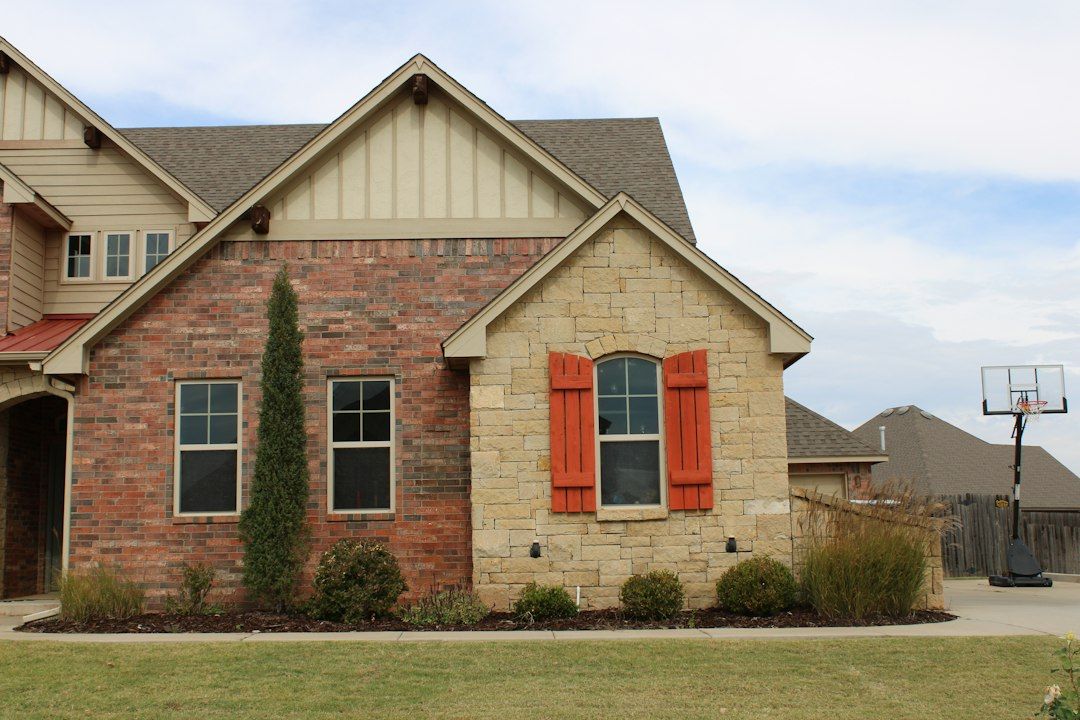
The materials used to build your home dictate how it reacts to seismic energy. Wood-frame homes are naturally flexible. When the ground shakes, the wood can bend and sway without immediately breaking. Brick, stone, and masonry, on the other hand, are rigid and stiff. They cannot bend. Consequently, homes covered in brick veneer are highly susceptible to cracking, crumbling, and separating from the frame during an earthquake. If you have a brick home, the risk of expensive cosmetic and structural damage is significantly higher.
Older Homes and Raised Foundations
The age and style of your foundation also play a massive role. Modern slab foundations fare reasonably well in minor quakes, but older homes built on raised foundations, crawlspaces, or unreinforced masonry are at a severe risk of shifting off their base. Retrofitting an older home to withstand earthquakes is incredibly expensive, making insurance a vital financial safety net for historic or older rural properties.
Total Financial Peace of Mind
For many of our clients, their property is their absolute largest asset. It is the culmination of decades of hard work. If a catastrophic earthquake were to render the home a total loss, the prospect of still owing a mortgage on a destroyed property while simultaneously paying to rebuild it is unthinkable. For a relatively low annual premium, earthquake coverage provides the ultimate peace of mind. It ensures that no matter what happens beneath the soil, your financial future remains secure.
Preparing Your Property and Navigating a Claim
Insurance is your financial backup plan, but physical preparation is your first line of defense. There are several practical, low-cost steps you can take right now to mitigate the damage a tremor might cause to your home or business.
First, secure your heavy appliances. A shifting water heater can snap a gas line or burst a water pipe, turning an earthquake into a devastating fire or flood. Strapping your water heater securely to the wall studs is a simple weekend project that drastically reduces your risk.
Next, look around your living spaces for top-heavy furniture. Bookcases, curio cabinets, and large armoires should be anchored to the wall. Keep heavy items on the lowest shelves, and consider installing child-proof latches on your kitchen cabinets to prevent glassware from flying out during a rumble.
If the unthinkable happens and a major earthquake strikes, your immediate priority is the safety of your family. Once the shaking stops and everyone is secure, the claims process begins.
Navigating an earthquake claim requires meticulous documentation. Take wide-angle photographs of every room, followed by close-up shots of any visible damage to the walls, foundation, roofline, and personal property. Do not throw away any broken items until an insurance adjuster has had the opportunity to inspect them.
Because earthquake damage is notoriously difficult to assess with the naked eye, we often recommend that our clients hire a professional structural engineer to inspect the property after a severe event. An engineer can identify hidden stress fractures in the foundation or compromised load-bearing beams that a standard visual inspection might miss. Presenting this professional documentation to your insurance carrier ensures that your claim accurately reflects the full extent of the damage.
Conclusion
We may not live on the edge of the Pacific Ocean, but the seismic history of our state proves that the ground beneath our boots is capable of causing immense damage. While regulatory efforts have successfully reduced the frequency of major induced earthquakes in recent years, the geological hazard has not disappeared. Minor tremors continue to rattle our communities, and the risk of a larger, damaging event remains a constant reality.
Relying on a standard homeowners or commercial property policy to protect you from earth movement is a dangerous gamble, as these policies explicitly exclude seismic damage. Taking the time to understand your true risk, calculating a fair percentage deductible, and verifying that your policy covers both natural and induced seismicity is the only way to ensure your family, farm, or business is fully protected.
At our agency, we believe in proactive education. We want you to understand exactly how your coverage works before you ever have to use it, providing you with the dependable guidance you need to make the best decisions for your future.
Ready to Secure Your Property?
When you’re ready for coverage that fits your life, business, or property, contact Cody Anderson Agency for a personalized insurance review today. Whether you’re a homeowner, rancher, business owner, active-duty service member, or veteran, we’re here with dependable guidance and protection when it counts.
We proudly serve our local communities by offering comprehensive, tailored solutions that leave no stone unturned. Do not wait for the next rumble to discover what your policy actually covers. Reach out to our dedicated team or submit a quote request directly on our site to ensure your largest assets are fully protected against the unexpected. If you have questions about your current policy, give us a call or visit our contact page. We look forward to earning your trust, loyalty, and friendship.
By Cody Anderson & Team · Published 7/16/2026